Response time matters
When planning investment in natural resource management (NRM), there often multiple actions that can achieve similar outcomes but differ significantly in cost and response time.
For example:
- Stock exclusion and natural regeneration are lower-cost options but typically have a slower environmental response.
- In contrast, active replanting and maintenance produce results more quickly, but at a higher cost.
- Similarly, soft engineering (e.g. logs and revegetation) is cheaper than hard engineering (e.g. rock structures), but may take longer to stabilise.
- Point source pollution control (e.g. wastewater treatment plan upgrades) delivers rapid water quality improvements but is significantly more expensive than programs that support agricultural practice change through extension.
All of these are valid NRM actions and have a place in an investment portfolio. However, the urgency of the environmental need often dictates which actions are prioritised. For example, in the case of water quality improvement for the Great Barrier Reef, there is a strong emphasis on actions that can deliver rapid results, even if more expensive.
Limitations of traditional investment models
Most traditional approaches to NRM investment do not account for the time lag between implementation and ecological benefit. Actions are typically modelled or presented as though they become fully effective immediately, estimating long-term (e.g. 30-year) benefits without representing the pathway to get there.
This oversimplification can lead to inaccurate expectations about when outcomes will be achieved.
Quantifying response time in Natural Capital Region
Natural Capital Region is used to develop evidence-based investment portfolios. A key feature is its ability to represent trade-off between time and cost.
To represent this trade-off, Natural Capital Region represents the time to achieve the end environmental outcome as one of four basic functions:
- Instant – immediate impact (e.g. wastewater treatment plant upgrade)
- Fast – rapid initial improvement that slows over time (e.g. reduced fertiliser application
- Slow – gradual improvement that is initially slow, then increases in effectiveness over time (e.g. natural regeneration)
- Linear – steady improvement over time (used when response data is limited)

Figure 1: Response curve functions
All non-instant responses are modelled over a 15-year timeframe, assuming full effectiveness is reached by year 15.
Incorporating adoption timeframes
In addition to environmental response, Natural Capital Region also models adoption lag—the time it takes for landholders to implement a given action.
For example, a practice change may eventually reach 100% adoption, but may take 10 years to do so. Natural Capital Region models this by:
- Applying the action progressively over the adoption period (up to 15 years).
- Combining adoption timing with the response curve, giving a more realistic estimate of when benefits will be realised.
- Using response time to inform investment prioritisation
Natural Capital Region enables investors to incorporate response time and adoption rates directly into their prioritisation process.
This is done by:
- Filtering actions based on adoption likelihood or response profiles (see Figure 2).
- Weighting temporal outcomes, such as projected environmental benefits at 5, 10, and 15 years post-implementation (see Figure 3).
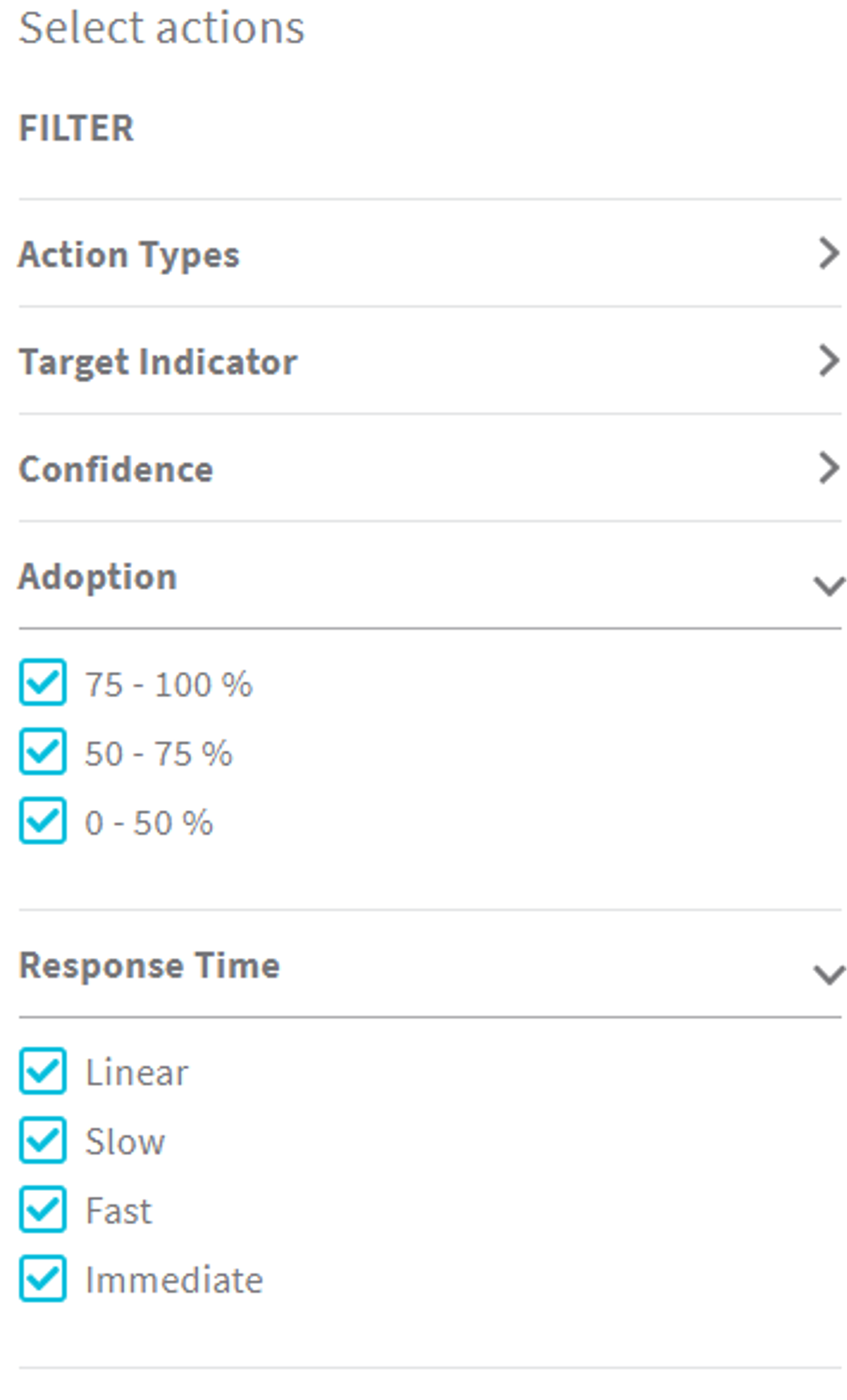
Figure 2: Filtering actions
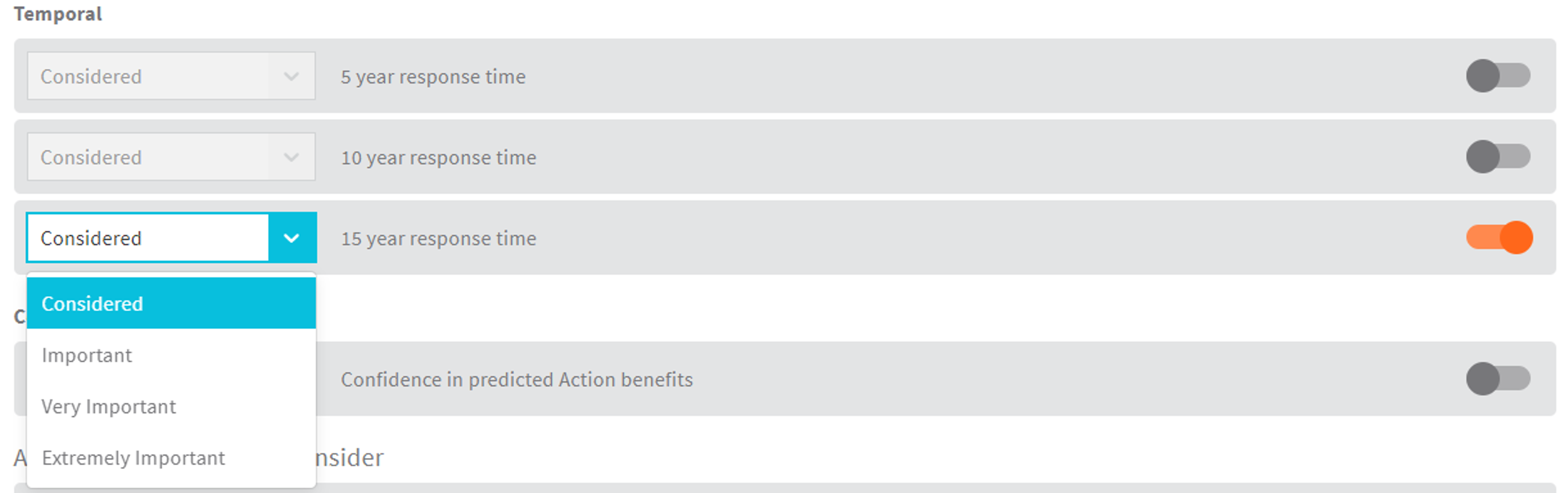
Figure 3: Weighting the importance of impact over time
Incorporating both response time and adoption lag provides a more realistic and nuanced understanding of how and when NRM investments will deliver benefits.
Read more about Natural Capital Region >>


 https://truii.com/wp-content/uploads/2026/03/TN-Roadtrip-Cover-image.jpg
625
625
Tash Venz
https://truii.com/wp-content/uploads/2017/11/truii-logo-full-colour.png
Tash Venz2026-03-24 09:08:132026-05-19 14:59:51Three cattle properties and a lot of dirt road—is there a real incentive for environmental reporting?
https://truii.com/wp-content/uploads/2026/03/TN-Roadtrip-Cover-image.jpg
625
625
Tash Venz
https://truii.com/wp-content/uploads/2017/11/truii-logo-full-colour.png
Tash Venz2026-03-24 09:08:132026-05-19 14:59:51Three cattle properties and a lot of dirt road—is there a real incentive for environmental reporting?